Zapier vs. Make: Which Automation Platform Is Right for Your Business?
If you're exploring automation for your business, you've almost certainly encountered both Zapier and Make (formerly Integromat). Both are powerful automation platforms, but they have distinct strengths, limitations, and ideal use cases. Choosing the wrong platform for your needs can mean paying more than necessary, hitting capability limits, or building automations that are difficult to maintain.
The Core Difference
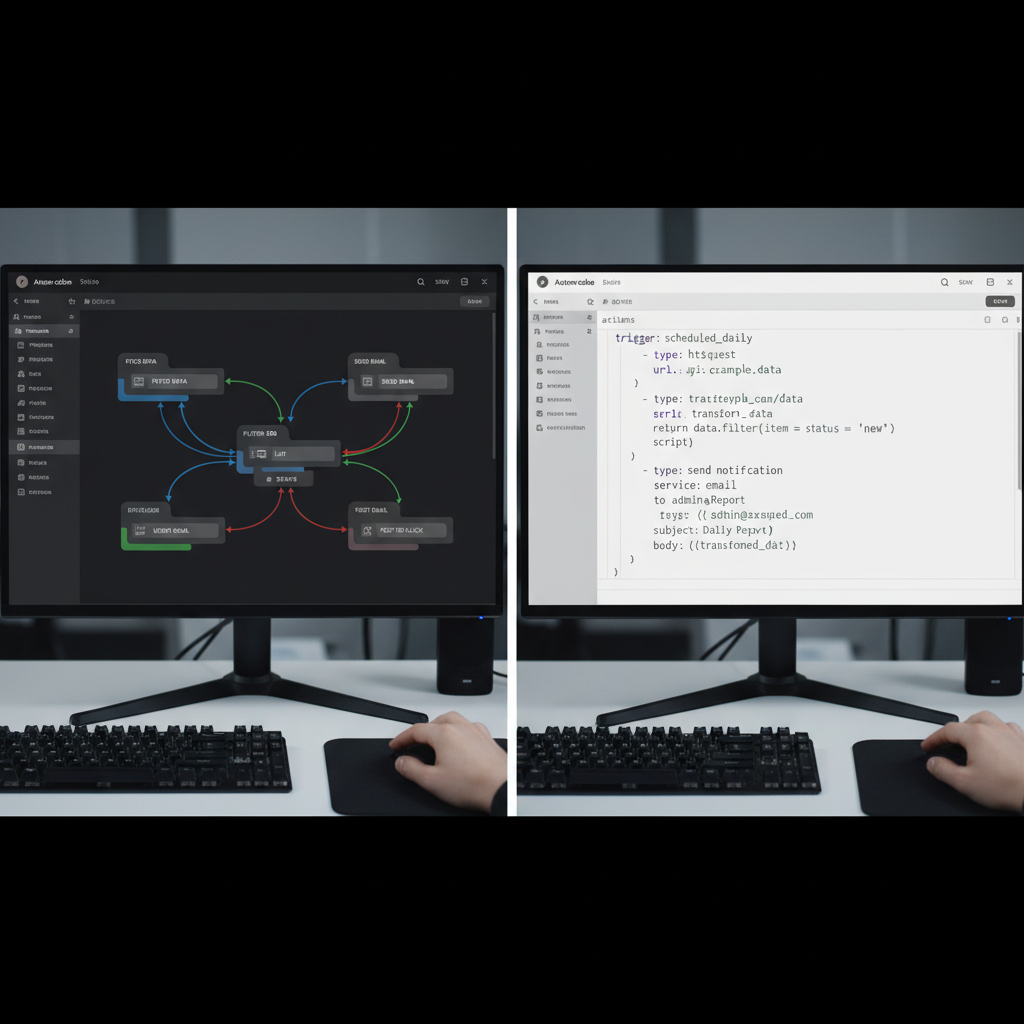
Zapier is designed for simplicity. It uses a linear trigger-action model that's easy to understand and set up, even for non-technical users. Make is designed for power. It uses a visual, node-based interface that supports complex branching logic, loops, error handling, and data transformation. Zapier is better for simple, straightforward automations. Make is better for complex, multi-step workflows with conditional logic.
Zapier: Strengths and Best Use Cases
Zapier excels at simple, two-step automations between popular apps. Its app library is the largest in the industry (6,000+ integrations), and its interface is genuinely beginner-friendly. Best use cases include: syncing data between two apps, sending notifications when something happens, creating records in one app when something happens in another, and simple email or Slack notifications. Zapier's pricing is based on "tasks" (individual automation runs), which can get expensive at high volumes.
Make: Strengths and Best Use Cases
Make excels at complex, multi-step automations with conditional logic. Its visual interface makes it easy to see the entire workflow at a glance, and its data transformation capabilities are far more powerful than Zapier's. Best use cases include: complex multi-step workflows with branching logic, data transformation and enrichment, high-volume automations (Make's pricing is more favorable at scale), and scenarios requiring error handling and retry logic. Make has a steeper learning curve but delivers significantly more capability.
Pricing Comparison
Zapier charges per task (each automation step counts as a task), which can add up quickly for complex workflows. A workflow with 5 steps that runs 1,000 times per month uses 5,000 tasks. Make charges per operation (similar to tasks) but is generally 3–5× cheaper at equivalent volumes. For high-volume or complex automations, Make is almost always more cost-effective. For simple, low-volume automations, Zapier's ease of use may justify the premium.
Our Recommendation
We use both platforms depending on the use case. For clients who want to manage their own automations with minimal technical knowledge, we often start with Zapier for simple workflows. For complex, high-volume, or business-critical automations, we build in Make. Many of our clients use both: Zapier for simple integrations and Make for their core business automation workflows. The best platform is the one that fits your specific needs, technical comfort level, and budget.
Ready to Automate Your Business?
Schedule a free process review and discover which automations will deliver the highest ROI for your specific situation.
Schedule Your Free Process ReviewMore Articles

How AI Automation Saves 20+ Hours Per Week for Small Businesses
June 5, 2026 · 7 min read

ChatGPT for Customer Support: A Complete Implementation Guide
May 28, 2026 · 9 min read

AI Workflow Design: How to Map and Automate Your Business Processes
May 12, 2026 · 10 min read