The Future of Business Automation: What to Expect in 2026 and Beyond

We are in the early stages of the most significant transformation in business operations since the introduction of the internet. AI automation is moving from a competitive advantage to a competitive necessity. Businesses that fail to automate will find themselves unable to compete on speed, cost, or quality with businesses that have embraced AI-powered operations.
The Current State of Business Automation
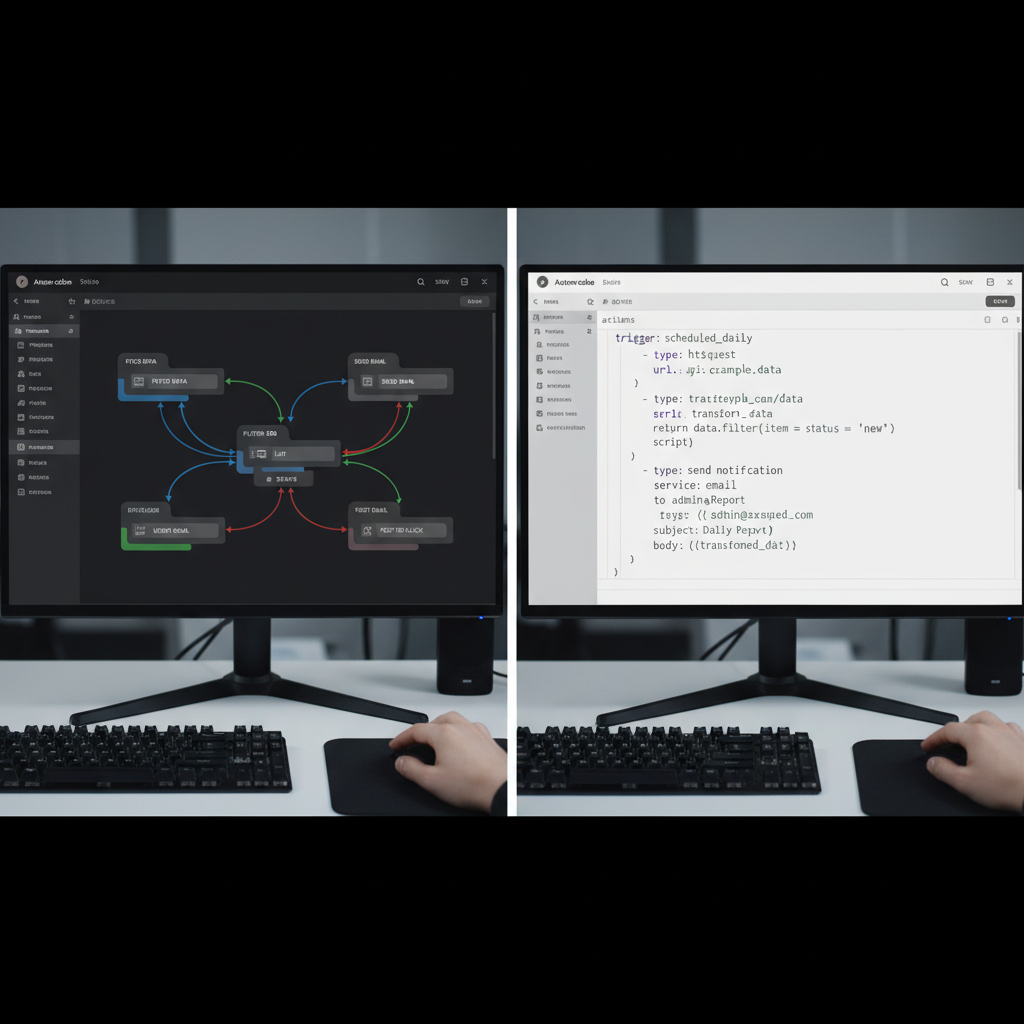
Today, most business automation is focused on connecting existing tools and automating rule-based processes. Make, Zapier, and similar platforms have made it possible for non-technical users to build sophisticated automation workflows. AI models like GPT-4 have added intelligence to these workflows — enabling natural language processing, content generation, and decision-making that previously required human judgment. We're at an inflection point where the cost of automation has dropped dramatically while the capability has increased exponentially.
Agentic AI: The Next Frontier
The next major evolution in business automation is agentic AI — AI systems that can take sequences of actions to accomplish complex goals, not just respond to individual prompts. Agentic AI systems can browse the web, execute code, interact with external APIs, and make multi-step decisions to complete tasks. For businesses, this means AI agents that can conduct research, prepare reports, manage projects, and handle complex customer interactions with minimal human oversight.
The Automation-First Business Model
Forward-thinking businesses are redesigning their operations from the ground up with automation as the default. Rather than asking "how do we automate this existing process?", they're asking "how would we design this process if automation were free and unlimited?" This automation-first mindset leads to fundamentally different — and more efficient — business models. Companies built this way can operate with a fraction of the headcount of traditional businesses at the same revenue level.
What This Means for Your Business
The businesses that will thrive in the next 5 years are those that start building their automation capabilities now. The learning curve for automation is real — it takes time to identify the right processes, build reliable systems, and train your team to work alongside automated workflows. Businesses that start today will have a significant head start over those that wait. The question isn't whether to automate — it's how quickly you can build the capabilities to do it effectively.
Getting Ready for the Automation Era
Preparing your business for the automation era requires three things: a clear inventory of your current processes and which are candidates for automation, a technology stack that supports automation (modern CRM, cloud-based tools, API-accessible platforms), and a culture that embraces automation as a tool for empowering employees rather than replacing them. The businesses that get this right will be the ones that define their industries in the decade ahead.
Ready to Automate Your Business?
Schedule a free process review and discover which automations will deliver the highest ROI for your specific situation.
Schedule Your Free Process ReviewMore Articles

How AI Automation Saves 20+ Hours Per Week for Small Businesses
June 5, 2026 · 7 min read

ChatGPT for Customer Support: A Complete Implementation Guide
May 28, 2026 · 9 min read
Zapier vs. Make: Which Automation Platform Is Right for Your Business?
May 20, 2026 · 8 min read